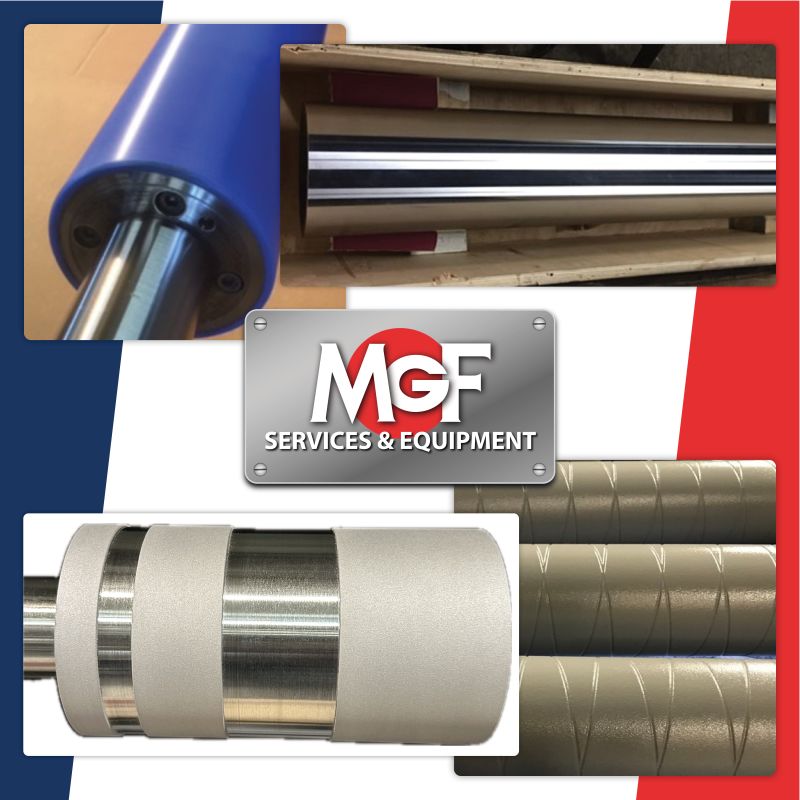
In printing and packaging, coatings are often treated as a wear fix — something you apply after a roller, guide, or seal surface starts causing downtime.
But the bigger opportunity is using coatings proactively to make the process more stable and repeatable.
The right surface doesn’t just last longer — it can run cleaner, handle web/material more consistently, and protect quality through finishing.
Where we regularly see the right coating make a measurable difference:
• Release behavior (less picking, sticking, and build-up)
• Web handling / coefficient of friction (more stable tension, fewer wrinkles)
• Marking and scuff resistance through converting and finishing
• Heat and surface interaction (sealing, cutting, and adhesive/ink contact points)
In other words, coatings aren’t only about durability — they’re about how the equipment behaves under real production conditions.
When a coating is selected for the failure mode and the process (not just the base material), it becomes a performance tool — not a band-aid.
That’s why coating decisions shouldn’t be one-size-fits-all. Substrate, chemistry, temperature, speed, cleaning methods, and the end requirement all matter.
If you haven’t revisited your coating strategy recently, you may have untapped gains sitting right on the surface.
Quick question: where are you seeing the most headaches right now — release/build-up, web handling (COF), marking/scuffing, or heat/seal surfaces?
At MGF Services & Equipment, we approach coatings as an engineering decision tied to the application and desired outcome. If you want, share the component + substrate + what it’s doing in production, and I’ll tell you what we typically look at first.