
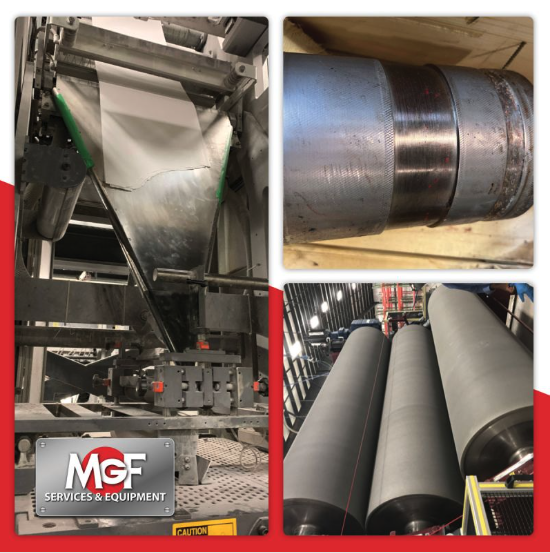
The press is usually the most monitored asset on the floor. But the earliest warning signs of trouble often appear downstream, where material handling, finishing, and delivery components quietly absorb the wear.
That might be a slitter section drifting out of tolerance on a web line. It might be sheetfed delivery wheels marking stock, a folder that suddenly needs constant tweaks, or a digital finishing module that is “still running” but no longer runs consistently. You may also see coated rollers starting to polish instead of grip, trim quality slowly degrading, or setups taking longer to hit acceptable output.
None of these feels like an emergency at first. Production keeps moving. Orders still ship. But those are often the moments when preventable downtime quietly starts building.
Most parts do not fail all at once. They wear gradually: bearings loosen, nips stop holding consistently, tension and tracking drift, and vibration or runout starts to show up — and operators compensate manually until they cannot.
From our side at MGF Services, this is also where planning matters. Repairs, recoveries, coatings, and replacement components often need to be scheduled well in advance — and global supply chain lead times can turn a “small” issue into weeks of lost production if you wait too long. When you evaluate the health of a press asset, include delivery/lead time as part of the risk: if a component is trending the wrong direction, it is usually better to plan the work than to bet you can get parts tomorrow.
By the time production is forced to stop, the issue is often labeled a sudden failure. In reality, it usually began weeks or months earlier.
These problems are difficult to catch because they do not always show up as scrap spikes or alarms. More often, they show up as more frequent adjustments, inconsistent cut/trim/fold quality across runs, rollers that look fine but no longer perform consistently, and guides or forming components that still function but no longer control the substrate cleanly.
Catching these issues early allows operations to schedule work on their terms, protect quality, and avoid emergency decisions that are always more expensive than planned ones.