
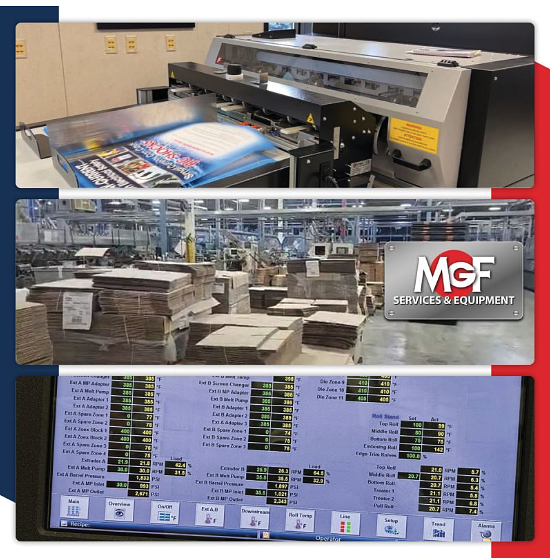
In printing, packaging, and converting plants, running components “a little longer” is part of daily life — not because anyone is careless. It happens when schedules are full, uptime matters, and every planned stop feels costly.
A roller still holds tension. The former nose still folds cleanly — usually. A slitter assembly still produces acceptable edge quality with more operator attention. So, it stays in service.
The challenge is that performance decline rarely announces itself loudly. It shows up as more adjustments between changeovers, more variance across shifts, setup times creeping longer, certain SKUs becoming “touchy,” and quality drifting just inside acceptable limits.
That matters at every level:
• Maintenance sees repeat adjustments, workarounds, and parts trending in the wrong direction.
• Supervisors feel it in the schedule — more stops, more start‑ups, and less predictability shift to shift.
• Production/Operations leadership sees the ripple effects: missed ship dates, overtime, expedited freight, and customer escalation risk.
Another big shift over the last decade is utilization and mix. A lot of legacy web offset equipment is still in service, but it may not run as often as it once did — so certain components can appear to “last longer” in calendar time. At the same time, shorter runs and more customized formats are pushing more work to sheetfed, digital, and hybrid platforms, where consistency and fast changeovers become the new definition of uptime. The common thread is the same: whether you run every day or only when work is there, drift and wear still show up first in the areas that handle, guide, cut, fold, and deliver the product.
In today’s market, those small drifts are harder to absorb. Shorter runs, more changeovers, tighter delivery windows, and limited experienced labor mean you have less margin for “babysitting” a line back into spec. When equipment is operating past its effective window, the risk is not just a breakdown — it’s lost capacity and a schedule you can’t trust.
These are not catastrophic failures, which makes them easy to normalize. But they introduce risk in subtler ways: load shifts to neighboring components, wear accelerates in places you are not watching, and minor inconsistencies cascade into finishing and delivery problems.
A practical way to stay ahead is to treat “still running” as a signal to do a quick risk check: What has changed in the last 30–60 days? What adjustments are becoming routine? What component would stop the line if it failed next week — and what is the realistic lead time to restore it?
If you can answer those questions early, you can plan the work, protect throughput, and keep the asset performing at a level the schedule depends on.