Seven signs it may be time to upgrade or replace your finishing line
In many manufacturing operations, finishing equipment has one essential job: keep production moving.
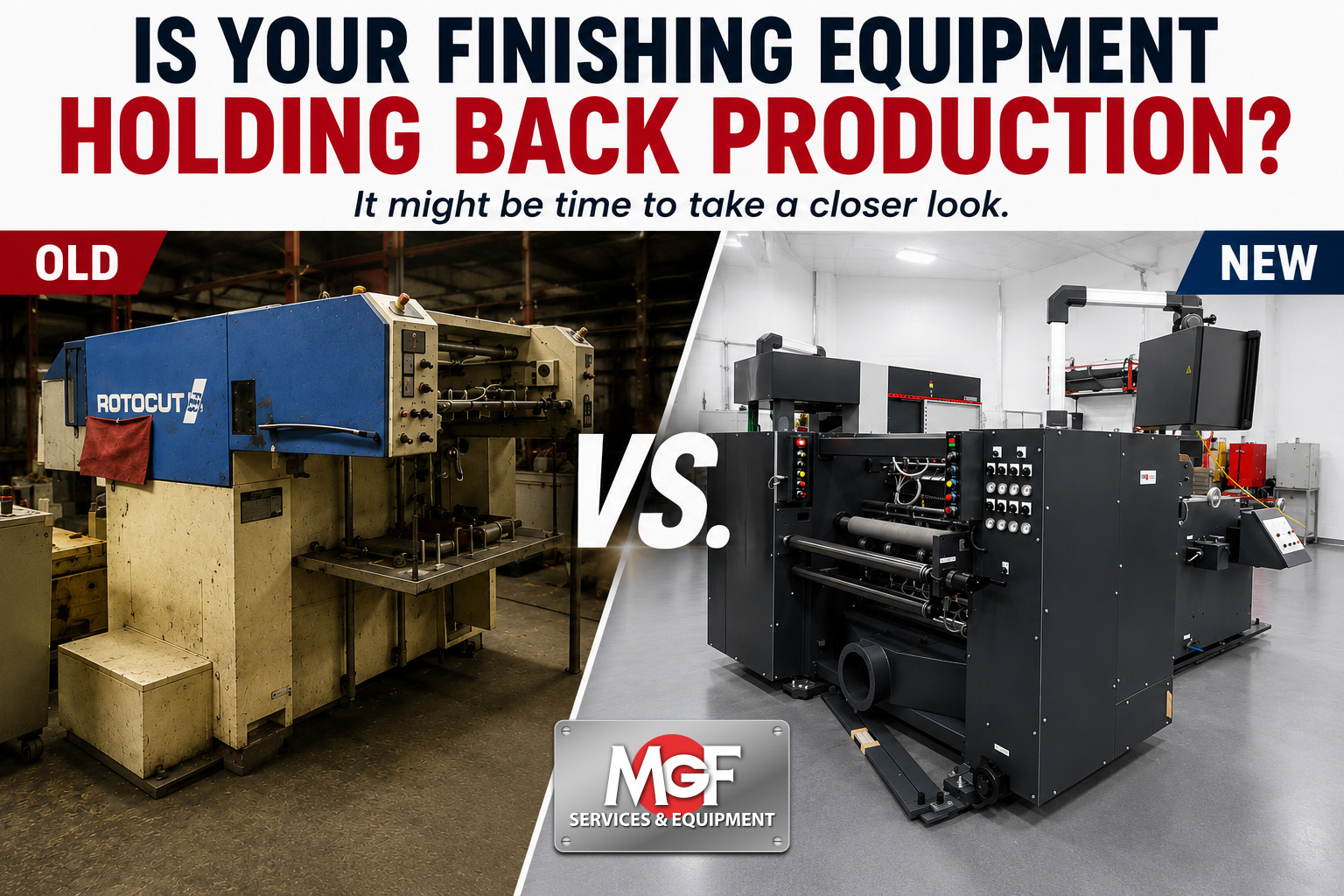
When equipment is running, it can be easy to assume everything is fine. But a finishing line does not have to fail completely to become a problem. Over time, aging equipment can quietly reduce productivity, increase operating costs, and limit future growth.
For many manufacturers, the challenge is knowing when repairs and maintenance still make sense—and when it is time to consider an upgrade or replacement.
Here are seven signs your finishing equipment may be holding back production.
1. Your Finishing Line Has Become the Production Bottleneck
Your press may be capable of producing more work than the finishing department can process.
Common indicators include:
- Work accumulating between operations
- Increased overtime
- Missed delivery schedules
- Production delays
- Limited ability to accept additional business
If finishing consistently limits overall throughput, the issue may no longer be maintenance. It may be capacity.
2. Changeovers Take Too Much Production Time
Older finishing systems often require extensive adjustments and setup between jobs.
Skilled operators can minimize setup time, but every minute spent adjusting equipment is still production time lost.
Ask yourself:
- How much productive time is lost each week during changeovers?
- How many additional jobs could be completed with shorter setup times?
- How often are operators making manual adjustments to maintain production?
Modern finishing solutions can help reduce setup time through simplified adjustments, automation, and improved repeatability.
3. Throughput No Longer Supports Demand
A common concern from manufacturers is simple:
"The machine still works, but it just can't keep up."
This is especially common with older rotary die cutters and other finishing equipment originally designed for lower production volumes.
As customer expectations rise and delivery windows shrink, speed and throughput become increasingly important.
When equipment capability starts limiting production opportunities, it is time to evaluate other options.
4. Quality and Consistency Are Harder to Maintain
Customers expect consistent quality, accurate repeatability, and reliable finished results.
Warning signs include:
- Registration issues
- Inconsistent cuts
- Gluing variations
- Increased scrap
- Excessive rework
- Customer complaints
Even when equipment remains operational, declining quality can increase costs, create delays, and affect customer satisfaction.
5. Replacement Parts and Support Are Harder to Find
As finishing equipment ages, replacement components and technical support can become more difficult to source.
Manufacturers may encounter:
- Obsolete controls
- Discontinued components
- Long lead times
- Dependence on used parts
- Increased custom machining requirements
A machine may still run well, but if critical parts are no longer readily available, the risk of extended downtime increases significantly.
6. New Opportunities Require Capabilities Your Equipment Does Not Have
Markets evolve, and customer requirements change.
Many manufacturers are being asked to support:
- New substrates
- Faster turnaround times
- More complex finishing requirements
- Higher quality expectations
- Increased automation
In these situations, replacement may be driven by opportunity—not equipment failure.
The question becomes:
Can your current finishing line support where your business is going next?
7. Operating Costs Continue to Rise
Older machines may be fully depreciated, but that does not always make them inexpensive to operate.
Consider the total impact of:
- Maintenance labor
- Replacement parts
- Downtime
- Scrap and rework
- Overtime
- Lost production capacity
- Lost business opportunities
Looking beyond repair invoices can provide a clearer picture of the true cost of ownership.
Making the Right Decision
There is no universal answer when deciding whether to repair, upgrade, or replace finishing equipment.
Some equipment can continue delivering reliable performance for years with proper maintenance and targeted upgrades. In other cases, modernization or replacement can improve throughput, quality, reliability, and overall efficiency.
The key is to evaluate how the equipment affects the entire production process—not just the next repair bill.
At MGF Services & Equipment, we help manufacturers evaluate their finishing operations, identify production challenges, and explore practical solutions that support long-term operational goals.
The best decision is not always repair, and it is not always replacement.
The best decision is the one that keeps production moving efficiently, profitably, and prepared for future growth.
Ready to Evaluate Your Finishing Equipment?
If your finishing equipment is limiting throughput, increasing downtime, or making it harder to meet customer demand, now may be the right time to take a closer look.
MGF Services & Equipment can help you assess your current finishing line, identify production challenges, and explore practical upgrade or replacement options that align with your operational goals.
Contact MGF Services & Equipment to start the conversation and keep your production moving forward.