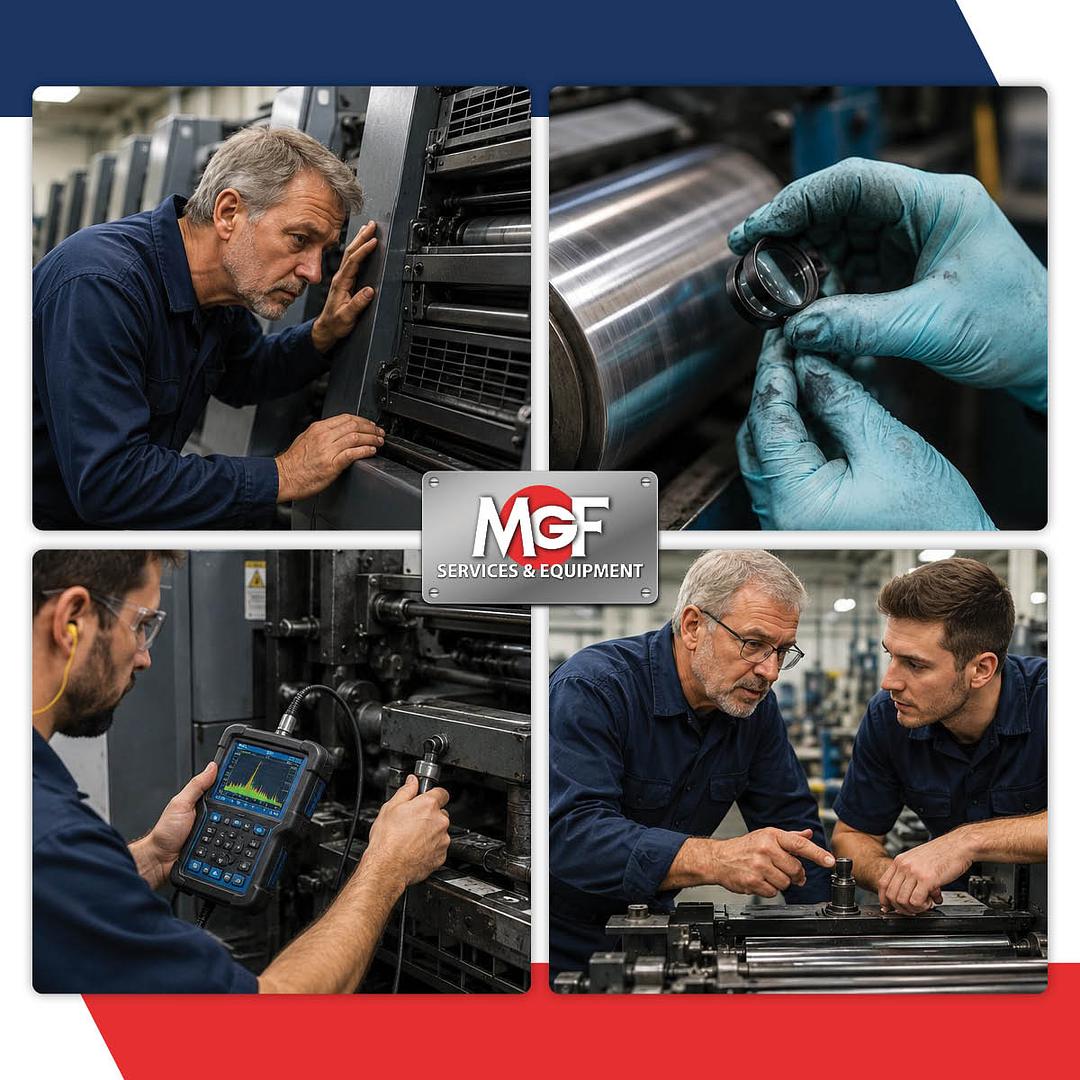
Experience hears what instruments later confirm.
Every piece of equipment has a way of communicating. Sometimes it's a subtle change in sound. Sometimes it's a slight vibration. Sometimes it's a machine that simply doesn't "feel" the same to the operator who has run it for years.
The challenge isn't whether equipment gives us warning signs—it's whether we recognize them before they become costly failures.
With more than 40 years of serving the printing, packaging, and converting industries, I've learned that the most successful operations combine the knowledge of experienced people with today's diagnostic technologies. Neither replaces the other. Together, they create a stronger maintenance strategy and a more reliable operation.
The takeaway is simple: when an operator notices a change, capture it, inspect it, and use the right diagnostic tool to confirm what is happening. Small observations, acted on early, can prevent larger failures later.
Experience Is Still One of the Best Diagnostic Tools
This is where experienced operators and maintenance technicians remain invaluable. They develop an awareness that cannot be learned from a manual. Over time, they recognize subtle changes long before a component fails, because they know what normal sounds, feels, and looks like on that specific machine.
Experienced operators frequently notice changes such as:
· A bearing beginning to make a different sound.
· A roller that no longer runs as smoothly.
· A slight increase in vibration.
· A web that tracks differently than it did the week before.
· Equipment that requires more frequent adjustments to maintain quality.
These observations often become the first indication that something deserves a closer inspection.
Technology Helps Confirm What Experience Detects
Today’s maintenance professionals have access to diagnostic tools that can turn a concern into useful data. If an operator hears a bearing change tone, vibration analysis may confirm it. If a drive or motor is running hotter than normal, thermal imaging may help identify the problem before it becomes a failure.
Examples include:
· Vibration analysis
· Thermal imaging
· Laser alignment
· Oil analysis
· Condition monitoring
· Predictive maintenance systems
Condition monitoring simply means watching equipment health over time. Instead of waiting for a breakdown, the plant tracks changes such as vibration, temperature, lubrication condition, alignment, and operating performance so maintenance decisions can be made earlier and with more confidence.
These technologies provide measurable data that helps verify what experienced operators and technicians often recognize first. The best results come when a concern from the floor is taken seriously, then checked with the right diagnostic method.
Technology does not replace experience; it strengthens it.
The Strongest Plants Combine Both
The most reliable operations I've worked with don't rely solely on experience, nor do they depend entirely on technology.
Instead, they create an environment where experienced employees share what they have learned, newer technicians bring modern diagnostic tools and fresh perspectives, and everyone treats equipment observations as valuable information.
When those two strengths work together, organizations often experience:
· Reduced unplanned downtime
· Better product quality
· Lower maintenance costs
· Longer equipment life
· More confident maintenance decisions
· Stronger knowledge transfer between generations
That combination benefits everyone.
Machines Usually Give Us Time
Most equipment failures do not occur without warning. Machines generally provide clues long before they stop running, and the real question is whether those clues are recognized early enough to take corrective action.
Listening to your equipment does not always mean using your ears. It means paying attention to small changes before they become major problems.
Final Thought
A useful habit is to document the small changes: who noticed it, what changed, when it started, and what was checked. That record helps connect operator experience, maintenance history, and diagnostic data before the issue becomes urgent.
Experience and technology are partners: one helps identify the warning signs, and the other helps explain them.
Together, they provide one of the most effective approaches to maintaining reliable equipment and reducing costly downtime.
So, what is your equipment trying to tell you today?