What should be inspected now—before the shutdown begins?
As the final months of the year approach, many printing, packaging and manufacturing operations are planning year-end maintenance and scheduled shutdowns. The most effective planning, however, begins well before the equipment comes out of production.
Waiting until equipment is out of production to determine what needs attention can create unnecessary pressure. Parts may require repair, rebuilding, recoating, manufacturing or replacement, and each step can add time to the schedule.
The better approach is to start evaluating critical components now.
Look Beyond Whether the Equipment Is Still Running
One of the challenges with preventive maintenance is that a component does not necessarily have to fail before it begins affecting performance.
Rollers, journals, bearings, coatings, oscillating assemblies and other wear components can continue operating while gradually developing conditions that may eventually affect print quality, web handling, registration, tension, or overall machine performance.
That is why an inspection should involve more than simply asking, “Is it still running?”
Consider whether there are signs of:
- Journal or bearing-area wear
- Surface damage, scoring or corrosion
- Coating deterioration or uneven wear
- Changes in roller diameter or surface condition
- Excessive movement, vibration or play
- Fit or alignment concerns
- Components requiring increasingly frequent adjustment
- Previous repairs that should be reevaluated
Small changes can provide valuable information about what may be developing before they become larger problems.
Inspection Comes Before the Repair Decision
Sending a component out for evaluation does not automatically mean it needs to be replaced—or even completely rebuilt.
A proper inspection establishes the component’s current condition, identifies what work—if any—is required and provides the information needed to plan the next steps.
Depending on the component, evaluation may include checking dimensions, journal condition, bearing fits, coating thickness, surface condition, runout, wear patterns and other critical specifications.
In some cases, disassembly may also be necessary before the full condition of an assembly can be determined.
That information allows the repair decision to be based on the actual condition of the component rather than assumptions.
Repair, Rebuild or Replace?
Once the condition is understood, the next question becomes what makes the most sense.
Some components may only require minor corrective work. Others may benefit from resurfacing, recoating, journal repair, bearing replacement or a complete rebuild. Occasionally, inspection shows that replacement is the better option.
There is no single answer that applies to every component.
The objective is to compare the available options, expected service life, cost and lead time before choosing whether to repair, rebuild or replace the component.
That is especially important with older equipment, specialized rollers and assemblies, or components that may have long replacement lead times.
Today’s Lead Times Need to Be Part of the Plan
One of the most important factors in maintenance planning today is lead time.
Whether a component is being repaired, rebuilt or manufactured new, the time required to complete the work can be longer than many companies have experienced in the past. Supply-chain constraints can affect raw materials, bearings, specialty coatings, replacement components and other items required to complete a repair or manufacture a new part.
Lead time includes more than the availability of a single part; it also includes every inspection, repair, manufacturing and outside-processing step required to complete the project.
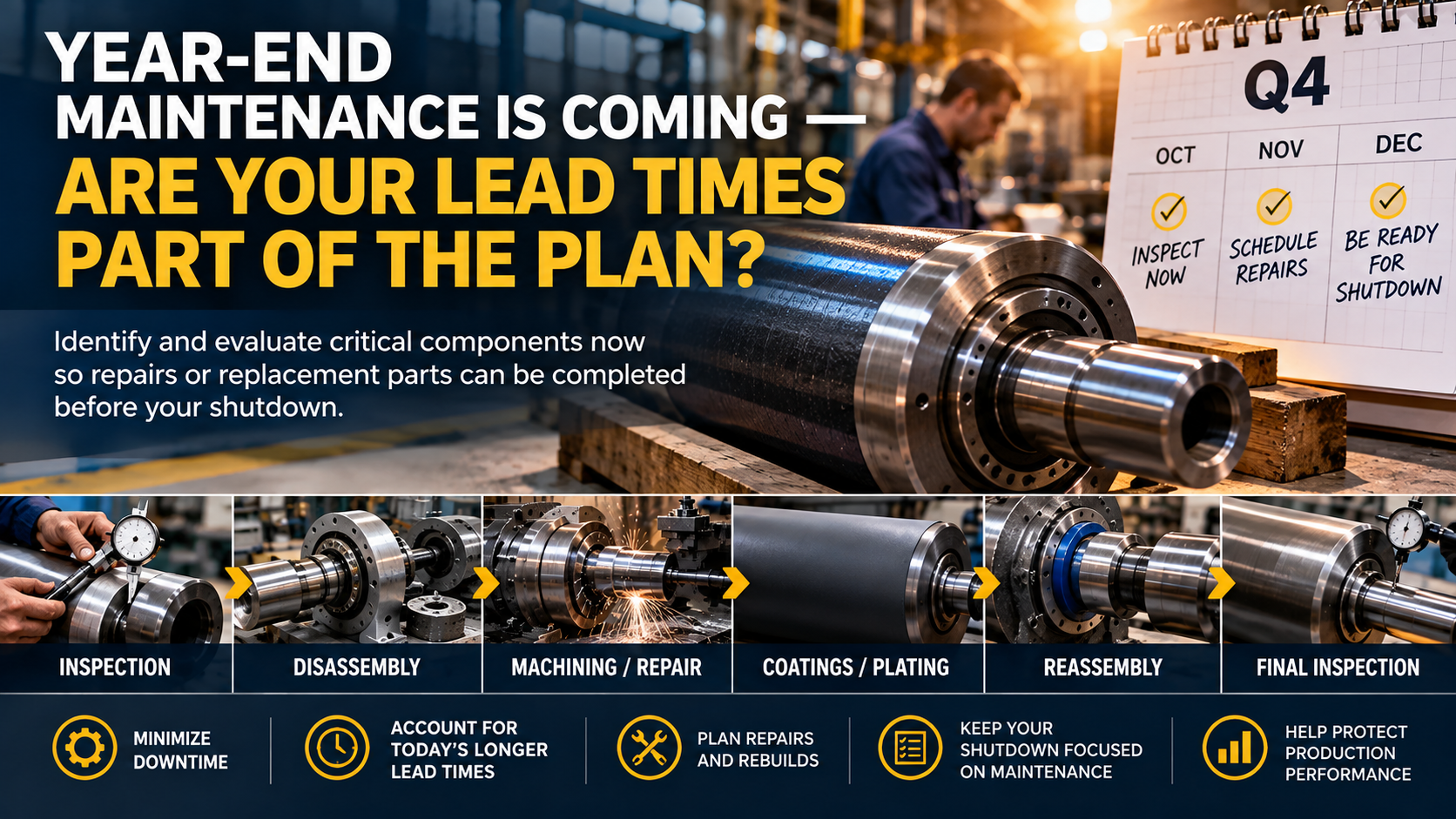
A roller or assembly may require inspection, disassembly, machining, journal repair, grinding, plating or coating, replacement bearings or components, finishing, reassembly and final dimensional verification. If one required material or component is delayed, the entire project schedule can be affected.
The same applies when replacement is the better alternative. Manufacturing a new component may require material procurement, machining, heat treatment, specialty coatings and other outside processes before the finished part is ready for installation.
This is why planning ahead has become more important than ever.
If you know a scheduled shutdown is approaching, don’t assume that a repair or replacement component can be turned around at the last minute. Identify components that may need attention early, determine what may be required and allow adequate time for materials, outside processing and manufacturing.
Whenever possible, consider critical spare components as part of that planning as well. Having a serviceable spare—or rebuilding a spare before it is urgently needed—can provide valuable protection when an unexpected failure occurs.
Use Your Shutdown for Maintenance—Not Diagnosis
A scheduled shutdown should be the time when planned maintenance is performed—not when diagnosis begins.
If critical components can be inspected beforehand, maintenance teams have a much clearer understanding of what needs to be addressed and what resources will be required.
That can mean the difference between a controlled maintenance schedule and discovering an unexpected repair after the equipment is already down.
Start the Conversation Now
At MGF Services & Equipment, we help printing, packaging and manufacturing companies evaluate critical components, coordinate specialized repair resources and determine practical repair or replacement options.
Our role is not simply to send a component out for repair. It is to help customers understand what is wrong, what needs to be corrected and which approach makes the most sense for the application.
If you have rollers, assemblies or other critical components that may need attention during an upcoming shutdown, start the evaluation now so you have time to understand the condition, compare your options and plan around the required lead time.
Plan the maintenance before downtime begins—so the maintenance schedule does not become the production schedule.
MGF Services & Equipment
Providing equipment, repair solutions and technical support to the printing, packaging and manufacturing industries.