Why Does Everything Take Longer in Manufacturing Today? Sometimes the Delay Starts With Communication.
Published:
If it seems like everything takes longer in manufacturing today, you’re not imagining the challenges.
In the projects I handle, delays can involve material availability, limited specialized resources, and coordination across several companies or departments. Experienced people retire or move on, and the knowledge they carry is not always easy to replace.
But there is another source of delay that deserves more attention: communication.
The Clock Often Starts Before Manufacturing Does
When a customer calls with a repair or manufacturing requirement, the first question is rarely as simple as, “How quickly can you make it?”
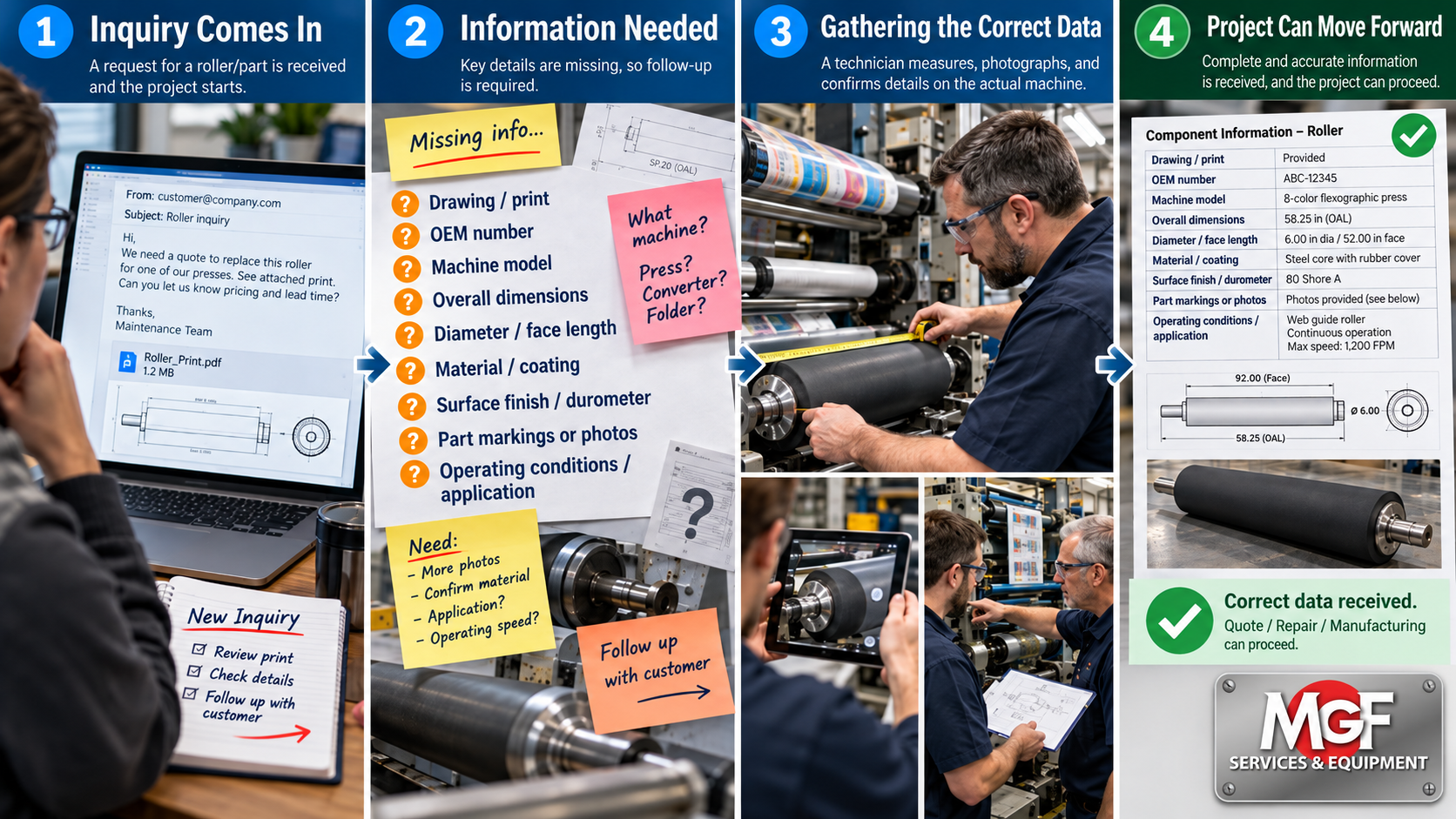
Before anyone can answer that responsibly, we need to understand exactly what we’re dealing with.
· What machine is the component from?
· Is there an OEM part number or drawing?
· Do the drawing dimensions match the component currently in service?
· What material, coating, or surface finish is required?
· Has the component been modified in the past?
· Is the existing part available for inspection?
· What failed, and what is known about the cause?
· What does the customer need the component to accomplish?
The schedule matters, too. Is the machine down now? Is the work planned around a maintenance shutdown? When does the component need to be back and ready for installation?
These questions help us determine the right approach and understand the urgency before making a commitment.
Information Is Often Scattered
One challenge I see is that the information required to complete a project may be spread across several people.
Purchasing may have the purchase history. Engineering may have the print. Maintenance may understand what happened to the component, while production knows how the equipment is operating. The OEM may have an older part number that helps identify what is needed.
An outside supplier may then need additional details before determining whether the component can be repaired, recoated, or reproduced.
Each handoff can add time, especially when a question has to pass through several people before an answer comes back. A project can appear to have a long manufacturing lead time when much of that time was actually spent defining the work before manufacturing began.
Bringing the right people into the conversation early can help reduce that back-and-forth.
Older Equipment Creates Another Challenge
Many printing, packaging, and converting operations continue to run equipment that has provided decades of dependable service. In many cases, maintaining proven equipment makes better financial sense than replacing an entire production line.
The challenge is that documentation may no longer be readily available.
The original OEM may have changed ownership. Part numbers may have changed. Drawings may be difficult to locate. The person who understood the machine 20 years ago may no longer be there.
A repair or replacement project may therefore require investigation before a solution can even be quoted. Photos, measurements, samples, OEM numbers, and historical documentation can all help establish what is needed.
You do not need to have every answer before reaching out. Starting with the information available allows us to identify what needs to be confirmed next.
What Does the Quoted Lead Time Actually Mean?
When reviewing a quotation, it is worth asking when the quoted lead time begins.
Depending on the project, it may begin when the supplier receives the purchase order, the required deposit, an approved drawing, or the component itself. Some repairs cannot be fully evaluated until the part has arrived and been inspected.
For example, a lead time measured from receipt of the component may start later than the date you placed the order.
Confirming that starting point—and any approvals or information still needed—helps everyone plan around the same schedule.
Better Communication Does Not Mean Overpromising
There are some things no supplier can fully control. Material availability can change, outside processing may require additional scheduling, and specialized coatings or heat treatments can affect the completion date.
Inspection may also reveal that a repair is more extensive than expected or no longer makes financial sense. Occasionally, the best recommendation is to take a different direction.
Good communication means explaining those findings and discussing the options.
At MGF Services & Equipment, our job is to understand what the customer is trying to accomplish and help determine the most practical approach. That may involve repair, manufacturing, rebuilding, sourcing, another specialized process, or recommending an alternative.
What Can Customers Do to Help Move a Project Faster?
Whenever possible, gather:
· Machine manufacturer, model, and OEM part number.
· Available drawings, clear photographs, and measurements.
· Known material, coating, surface finish, or hardness requirements.
· Application details, operating conditions, and any history of modifications or failure.
· The needed return date, planned shutdown window, and whether the machine is currently out of service.
Send what you have, even if the information is incomplete. A conversation can help determine what needs to be gathered next.
If several departments are involved, identifying one primary contact can also help keep questions, answers, and approvals moving.
The Manufacturing World Has Changed. Communication Matters More Than Ever.
I have spent more than four decades working with printing, packaging, and manufacturing operations. The technology has changed tremendously during that time, and so have the supply chains.
One principle has remained consistent: the sooner we understand the problem, the sooner we can begin working toward the right solution.
We may not be able to eliminate every manufacturing lead time. But better information, timely questions, and clear communication can help prevent avoidable delays.
Have an upcoming repair, roller refurbishment, or component replacement? Contact MGF Services & Equipment through our website inquiry form or email mfriedl@mgf-services.com. Share the information you have and when you need the component back. We can help identify the next steps and determine a practical path forward.