The Hybrid Pressroom's Hidden Risk: Is Legacy Finishing Starving Your Digital Press?
Published:
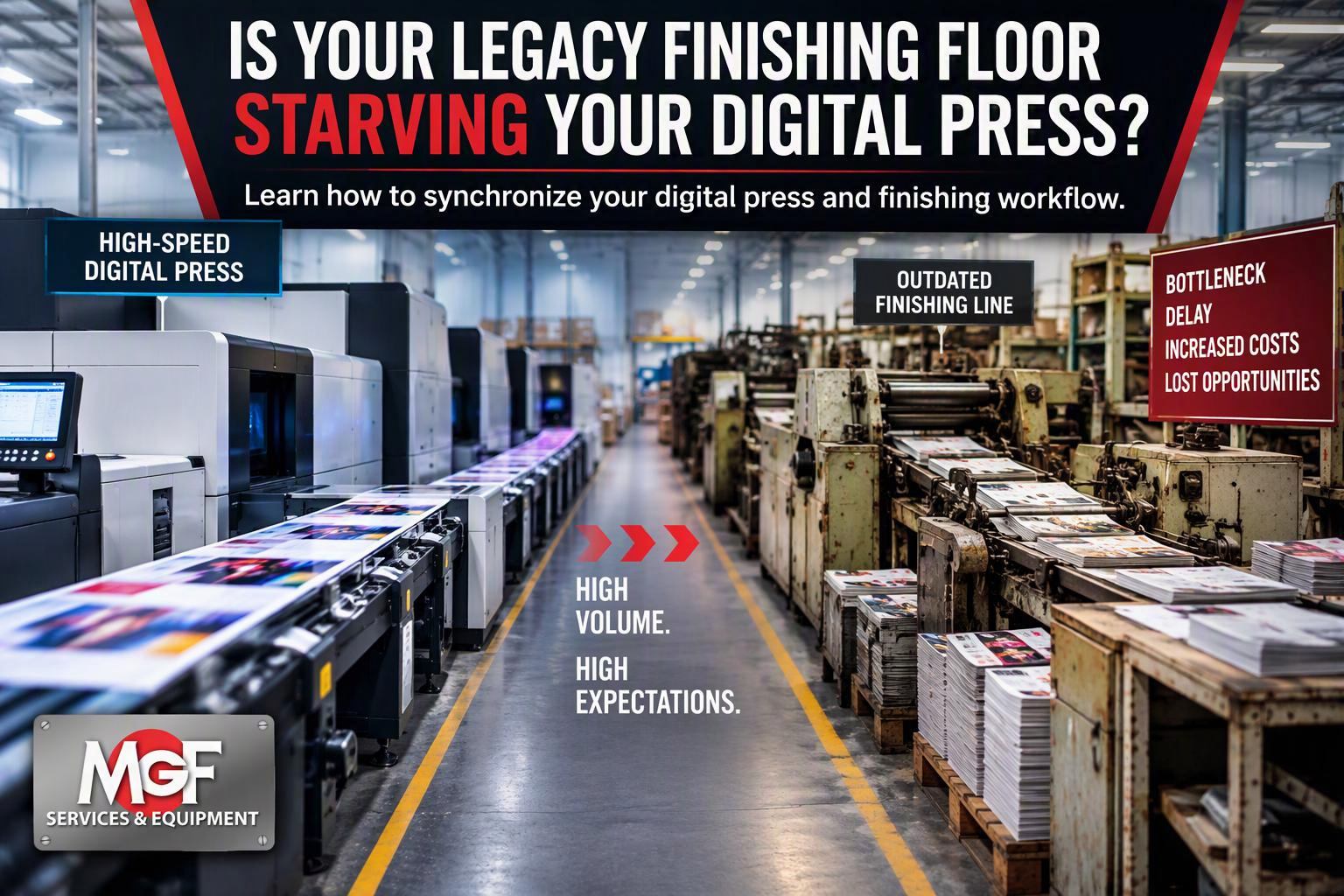
When a commercial print or packaging house decides to transition into digital or expand its packaging capabilities, the centerpiece of that investment is almost always a shiny, high-speed digital press or a new flexible packaging line.
It makes sense. The promise of zero make-ready waste, variable data printing (VDP), and faster turnaround times is exactly what modern brand managers are demanding.
But as we have seen over our 40-plus years on production floors, a major issue often occurs shortly after installation.
The new digital press is up and running, spitting out shorter, highly customized runs at blistering speeds. But downstream, the finishing department is drowning. Jobs are sitting on pallets, waiting for manual cuts, slow structural setups, or out-of-sync folding lines.
The truth that many operations discover the hard way is simple: You cannot feed a 2026 digital workflow into a 1996 finishing line and expect to maintain your profit margins.
The Post-Press Bottleneck is Reclaiming Your Waste
Traditional commercial printing relies on long production runs. If it takes your finishing department an hour to set up a legacy slitter roller, folder, or cutter, that setup time is easily absorbed over a run of 50,000 sheets.
Digital printing flips this math upside down. When your workflow shifts to twenty different jobs of 500 sheets each, your finishing line has to stop, adjust, and reset twenty separate times. If your finishing equipment requires manual mechanical adjustments, your digital press efficiency drops to zero.
The bottleneck isn’t happening at the front of the room anymore—it’s happening at the tail end.
Mechanical vs. Digital: Synchronizing the Line
To survive in a hybrid environment where traditional offset and high-speed digital coexist, your finishing equipment needs to match the agility of your presses. This doesn’t necessarily mean scrap-heaping your proven iron. In many cases, it means smart modernization.
Printers are successfully protecting their margins through a few specific avenues:
- Targeted Web Finishing Retrofits: Integrating modular, agile finishing components—like high-performance slitter rollers or advanced dynamic cutters—directly into the line to handle fast-changeover jobs seamlessly.
- Electrical and Control Upgrades: Replacing outdated analog relays and manual dials on existing finishing equipment with modern PLCs, touchscreens, and digital servos. This allows operators to save custom job profiles and recall them instantly, slashing make-ready finishing times from an hour to mere seconds.
- Application-Specific Refurbishments: Making sure components like anvil rolls, draw rollers, and slitter modules are engineered for the specific substrates being introduced, especially thicker packaging stocks or delicate digitally printed labels that scratch easily.
Stop Starving Your Assets
The most expensive asset in your plant isn't the machine you just bought—it's the machine that is sitting idle because it's waiting on the next step of the process.
Before you assume you need a brand-new, multi-million-dollar production line to stay competitive in digital and packaging, look closely at your finishing floor. Often, retrofitting your proven finishing machinery with upgraded digital controls and precision mechanical components is the fastest, most cost-effective path to balancing your hybrid pressroom.